Hyperthyroidism in older cats: signs and treatment
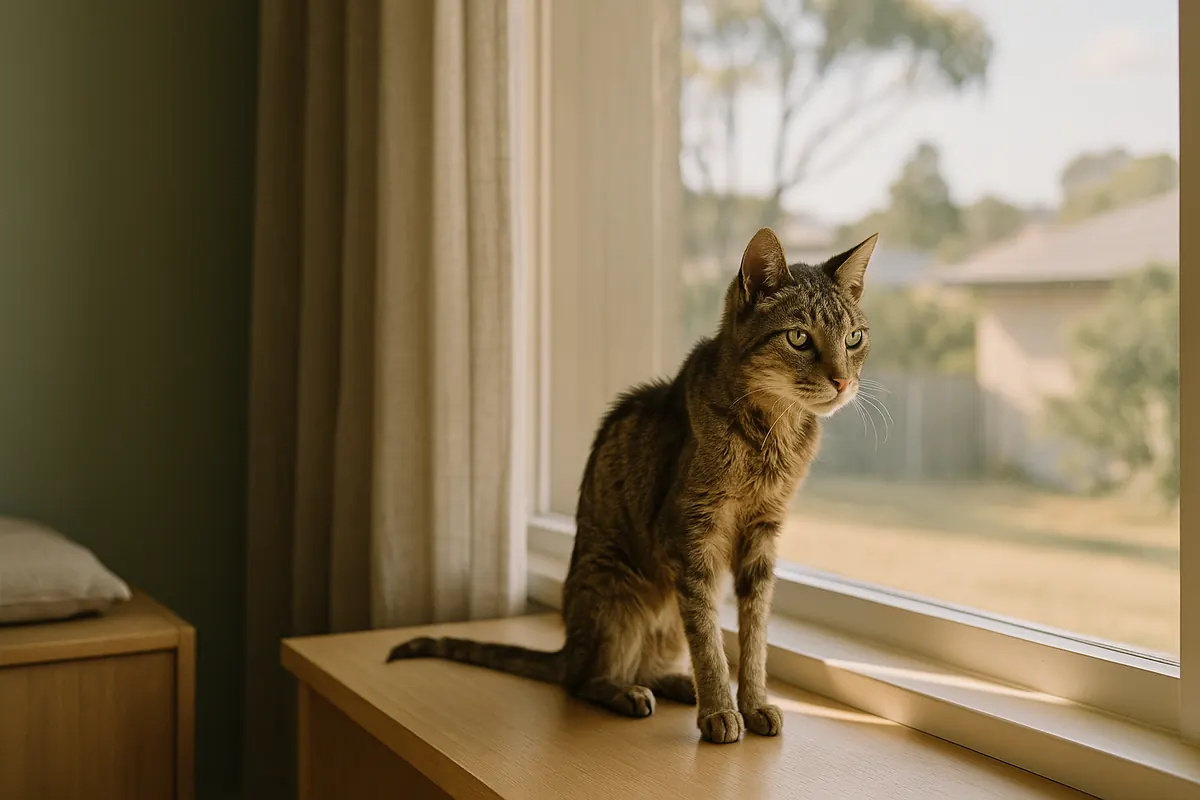
Hyperthyroidism is a common disease of older cats, around 10 per cent of cats over 10 years old will develop it. The classic picture: weight loss despite a bigger appetite, restlessness, vomiting, scruffy coat. A T4 blood test ($80 to $150) confirms it. Below: how to spot it early, the four treatment options compared, the kidney-disease catch, and what it costs over the cat's remaining years.
Signs to watch for in older cats
Hyperthyroidism is sneaky because the cat is often eating well and acting bright. Owners notice the weight loss before anything else. Common signs:
- Weight loss despite a normal or bigger appetite
- Restlessness, particularly at night, vocalising more than usual
- Increased thirst and urination
- Vomiting (often dismissed as “just hairballs”, see cat vomiting)
- Scruffy, matted or unkempt coat
- Diarrhoea or larger volume stools
- Rapid heart rate, sometimes detectable as a heart murmur
- Heat intolerance, panting more than usual
Many of these overlap with chronic kidney disease, see the cat kidney disease guide. The two often coexist in older cats.
How it's diagnosed
The total T4 blood test is the headline test. $80 to $150 added to a senior wellness panel. Most clinics include it automatically in cats over 8.
Around 10 per cent of hyperthyroid cats have a normal total T4 reading. If clinical signs strongly suggest hyperthyroidism but T4 is normal, a free T4 by equilibrium dialysis or a T3 suppression test is the next step.
A thyroid scan (technetium pertechnetate scintigraphy, available at referral centres) is the gold standard for confirming and locating thyroid tumour tissue, often used before radioactive iodine treatment.

The four treatment options
- Methimazole tablets (or transdermal gel). Manages symptoms cheaply but lifelong. Twice-daily tablets. $30 to $60 a month. Side effects (loss of appetite, lethargy, occasional liver effects) in around 10 per cent.
- Radioactive iodine (I-131). Single injection at a specialist clinic. Cures around 95 per cent of cats permanently. $2,500 to $3,500. Cat stays at the specialist clinic 5 to 10 days while radiation drops to safe levels.
- Thyroidectomy (surgery). Removes the affected thyroid lobe. $1,800 to $3,500. Less common now because I-131 is safer (no anaesthetic risk in older cats). Risk of damaging the parathyroid glands.
- Y/d diet. Hill's prescription diet very low in iodine. Works only as the sole food, no treats, no other meals (including from neighbours). $80 to $130 a month. Effective in around 70 per cent of compliant cats.
Most owners start with methimazole (cheap, reversible, lets the vet check kidney function with normalised thyroid) and then decide on long-term plan. The economic break-even between lifelong methimazole and one-off radioactive iodine is roughly 4 years, so cats expected to live longer get more out of the I-131. The find a vet guide covers finding a referral centre offering radioactive iodine.
The kidney disease catch
Hyperthyroidism increases blood flow through the kidneys, which can mask underlying chronic kidney disease. When thyroid is treated and blood flow normalises, kidney disease that was hidden becomes apparent.
This is why most vets:
- Start with methimazole rather than going straight to radioactive iodine
- Check kidney parameters before treatment, after treatment, and periodically
- Adjust kidney management if disease is unmasked
It's not a reason to avoid treatment, untreated hyperthyroidism wrecks the cat. It's a reason to treat in stages and monitor kidneys. The cat kidney disease guide covers managing both conditions together.
What it costs over time

Straight answers
What are the early signs of hyperthyroidism?
Weight loss despite a bigger appetite is the headline. Add restlessness, vocalising at night, vomiting, increased thirst and urination, scruffy coat. Often subtle for months before owners join the dots.
How is it diagnosed?
A blood test for total T4 (thyroxine) is the standard, $80 to $150 added to a general senior wellness panel. Borderline cases sometimes need a free T4 or T3 suppression test. Diagnosis is straightforward once the thought occurs.
What's the difference between treatments?
Methimazole tablets manage symptoms cheaply but lifelong, $30 to $60 a month. Y/d diet works only as the sole food. Radioactive iodine cures it in one go for $2,500 to $3,500. Surgery (thyroidectomy) is rarely chosen now, more anaesthetic risk than I-131.
Is hyperthyroidism painful?
Not directly, but secondary effects (weight loss, muscle wasting, hypertension, heart strain) make cats unwell. Untreated cats become dramatically thin and frail in 6 to 12 months. Treated cats often look 5 years younger within 2 months.
Why is radioactive iodine the gold standard?
Single treatment, no daily medication, cures around 95 per cent of cats permanently. The cat stays at the specialist clinic 5 to 10 days while radiation drops. Available at a handful of referral centres in each Australian state.
Does kidney disease affect treatment choice?
Yes. Hyperthyroidism masks underlying kidney disease by raising blood flow through the kidneys. Treating thyroid can unmask kidney disease, treatment plan needs to consider both. Methimazole trial first lets the vet see what kidney function looks like at normal thyroid.
Hyperthyroidism is the senior-cat condition most often missed by owners and most readily treated by vets. Annual senior wellness panels from age 8 catch it early. The treatment choice (methimazole vs radioactive iodine) is mostly an economics-and-logistics question once the diagnosis is clear. Related: cat kidney disease, cat vomiting, vet payment plans. Information here is general and isn't a substitute for veterinary advice.