Mobile vet services in Australia, what they do, what they don't
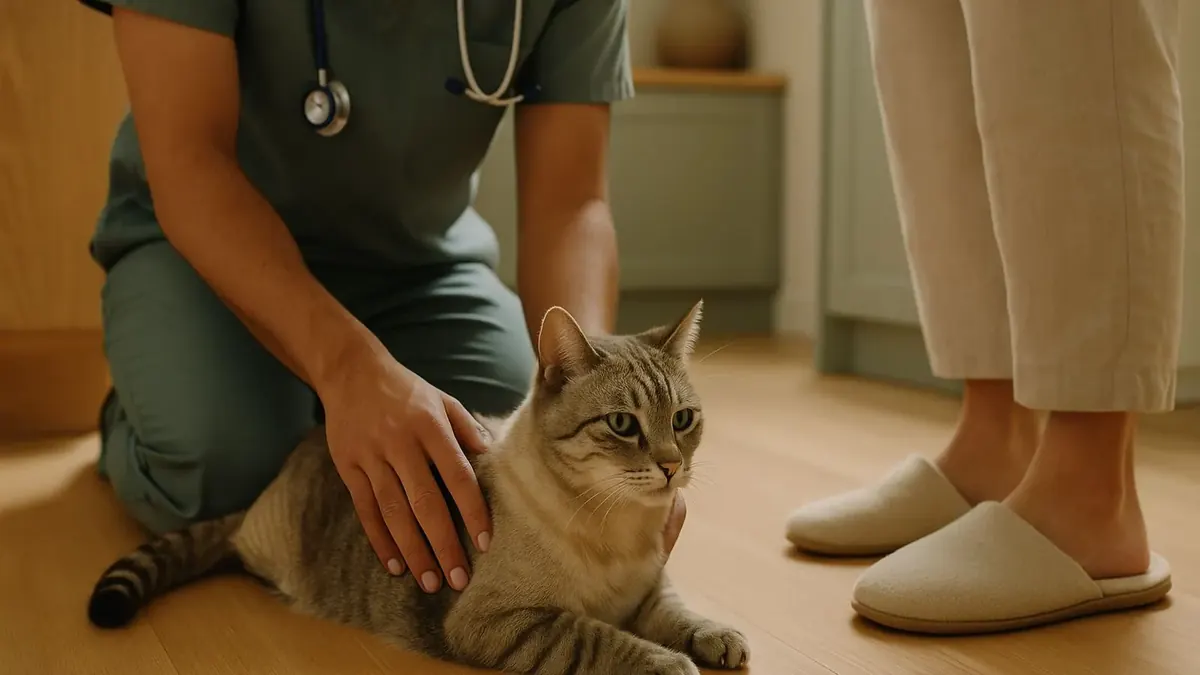
A mobile vet comes to your home for routine care. For anxious cats who turn into a tornado at the sight of the carrier, for elderly pets who find the car ride distressing, for multi-pet households, and for end-of-life care, a mobile vet is often the kinder option. Here's what they do, what they can't do, and what it costs in Australia.
What a mobile vet actually is
A mobile vet is a registered veterinarian who travels to your home in a fully equipped vehicle. They carry vaccines, microchips, sample collection kit, basic diagnostic tools, scales, a portable exam setup and a refrigerator for medications. For most routine appointments, the only difference between a mobile vet and a clinic visit is the location. (And the cat being calmer. The cat is always calmer.)
You book a time slot, the vet arrives within a window (similar to a tradie), and the consult happens at your kitchen table or on a quiet rug. Most appointments take 30 to 45 minutes, slightly longer than a clinic consult because there's no rush and no waiting room churning behind them.

Why owners use them
Less stress for anxious pets
Some animals fall apart at the vet. Cats are the obvious example, many simply hate the carrier, the car, and the smell of strange dogs in the waiting room. A mobile vet skips all three. For a stressed pet, the difference between a home visit and a clinic visit can be enormous, both for them and for whoever's wrangling them. (We've seen vet nurses bleed for less.)
Easier for elderly or mobility-limited owners
If you can't drive, can't lift a large dog into a car, or live alone with multiple pets, a mobile vet is genuinely useful. Several mobile vets in Australia specialise in supporting elderly clients with elderly pets.
Better for multi-pet households
Five cats and one carrier doesn't end well. Vaccinating a household of pets in one visit is faster, cheaper per pet, and significantly less stressful for everyone. Including the cat in the bathroom who hasn't realised yet.
Calmer end-of-life care
For many owners, the strongest reason to use a mobile vet is for euthanasia. A peaceful goodbye on the couch, surrounded by family, is what most people would choose if they could. Most mobile vets offer this and have done it many times, it's the most common reason owners use mobile services for the first time.
Time saved
A standard clinic visit is 90 minutes door-to-door once you account for travel and waiting. A mobile vet visit is the time you spend with the vet. Nothing more.

What they do
The list is longer than most people think. A well-equipped mobile vet handles most of what a routine clinic appointment covers:
- Vaccinations, including puppy and adult vaccinations for dogs and cats
- Health checks and senior wellness exams
- Microchipping
- Blood draws for routine bloodwork sent to a lab
- Faecal and urine testing
- Skin scrapes and ear cytology
- Routine parasite prevention, flea, tick, worming products dispensed on the spot
- Allergy and dermatology consultations
- Minor wound care, cleaning, basic suturing of small lacerations
- Euthanasia and home cremation arrangements
- Repeat scripts for ongoing medications
- New pet checks for puppies, kittens, rescues, or rehomed pets
- Behavioural consultations, much better at home than in a clinic, where the dog is a different animal
- Hospice and palliative care for terminal patients
Some mobile vets also offer nail trims, ear cleans, basic dental scaling on cooperative pets, and post-surgical recheck visits.

What they can't do
This is the bit most people don't think about until they're in the middle of an issue. Mobile vets are excellent for routine and palliative care. They aren't a clinic.
- Major surgery. Desexing, lump removals, fracture repair, abdominal surgery, all need a sterile theatre and surgical assistance. The desexing guide covers cat and dog surgical costs.
- X-rays and ultrasound. Imaging needs heavy equipment. A mobile vet can refer you to a clinic.
- In-house bloodwork results. Some carry a small in-vehicle analyser, but most send samples to an external lab with results next-day or later.
- Hospitalisation. Pets needing overnight monitoring, IV fluids beyond a single dose, or close observation need a clinic.
- Emergency care. Mobile vets work by appointment. For an after-hours emergency, you need a 24-hour hospital, see the emergency vet guide.
- Dental work under anaesthesia. A full dental cleaning requires general anaesthesia, monitoring equipment and dental tools that don't fit in a vet's car.
- Complex diagnostics requiring referral imaging or specialist input.
A good mobile vet will tell you when an issue needs a clinic and refer you. They want the right outcome for your pet, even if it means handing the case off. (The mobile vets who don't refer when they should aren't worth booking.)

Honest costs
Compared to a clinic, expect to pay $50 to $100 more for the convenience and travel time. For multi-pet households, ask about discounted rates per additional pet, most mobile vets offer them.
Some mobile vets bill differently for euthanasia visits, with a clearer flat fee covering the consultation, sedation, the procedure, and either home burial paperwork or cremation transport. Ask up front so there are no surprises. This is one of those moments where you really, really don't want a surprise.
How to find a mobile vet near you
Most Australian capital cities have multiple established mobile vet services. Country and regional areas have fewer options but they exist, and often the local mobile vet covers a wide area.
Green flags
- Registered with the relevant state's veterinary board (mandatory for any vet)
- Clear pricing structure on their website
- Defined service area
- Insurance and proper biosecurity (a vehicle that goes between many homes needs protocols)
- Clear referral pathway to a clinic when needed
- Reviews from local pet owners
Red flags
- No physical address or business details
- Cash-only with no receipt
- Reluctance to provide written treatment notes or vaccination records
- Vague pricing
- Pressure to add expensive treatments without clear reasoning
Is a mobile vet right for your pet?
Mobile is a great fit if:
- Your cat is impossible to get into a carrier
- Your senior dog finds the car ride distressing
- You have multiple pets needing the same routine care
- You're considering at-home euthanasia
- You're elderly or have limited mobility
- You work shifts and clinic hours don't suit
- You live in an apartment building where moving large dogs is hard
Stick with a clinic if:
- You want a single relationship with one clinic over your pet's lifetime
- Your pet needs surgery, dental work or imaging soon
- Your pet has a chronic condition needing in-house diagnostics
- You have a young, healthy pet who's fine in a clinic
- Cost is the deciding factor, clinics are typically cheaper
Many owners use both. Clinic for surgery, dental and emergencies; mobile for vaccinations, senior checks and end-of-life. There's no rule that says you must pick one.
Straight answers
Can a mobile vet euthanase my pet at home?
Yes. Most mobile vets in Australia offer in-home euthanasia and many are best known for it. The vet sedates your pet first so they fall asleep peacefully before the final injection. You can be present, choose where it happens, and arrange cremation through the vet.
Do mobile vets see exotic pets and birds?
Some do. Most mobile vets focus on dogs and cats, but a small number specialise in birds and exotics. See the bird and exotic vet guide for finding species-specific care.
How far in advance should I book?
For routine appointments, allow 1 to 2 weeks. For urgent appointments, many mobile vets keep some same-week or next-day slots. End-of-life appointments are often prioritised and seen within 24 to 48 hours.
Will pet insurance cover mobile vet visits?
Most pet insurance covers any registered vet, mobile or clinic-based. The treatment must be eligible under your policy, routine vaccinations are usually excluded from accident-and-illness cover unless you have a wellness add-on.
Can a mobile vet take a blood sample?
Yes. Blood draws are routine in mobile vet visits. The sample is sent to an external lab and you'll have results within 24 to 72 hours, depending on the test panel.
What if my pet needs treatment after the visit?
Mobile vets dispense medications at the visit just like a clinic does, including antibiotics, anti-inflammatories, parasite prevention and dietary products. Repeat scripts can be sent to your local pharmacy.
A vet who comes to your kitchen and your cat doesn't try to escape via the chimney is, broadly speaking, a win. Pick the right one and routine care becomes the easiest part of pet ownership. Information here is general; check your local mobile vet's service offering, registration and insurance before booking. For after-hours emergencies, go to a dedicated 24-hour hospital, not a mobile service.