Ear mites in dogs, how to spot them and what to do
Ear mites are a common cause of itchy, scratchy ears in puppies and dogs that share a home with cats. They're treatable, but they're easy to confuse with the much more common ear infection, and treating one when it's actually the other wastes weeks. Here's how to tell the difference, what to do, and yes, the cat almost certainly started it.
What ear mites are
Ear mites (Otodectes cynotis) are tiny parasites that live in the ear canal, feeding on skin debris and ear wax. More common in cats than dogs but absolutely show up in dogs, especially puppies and dogs sharing households or environments with cats.
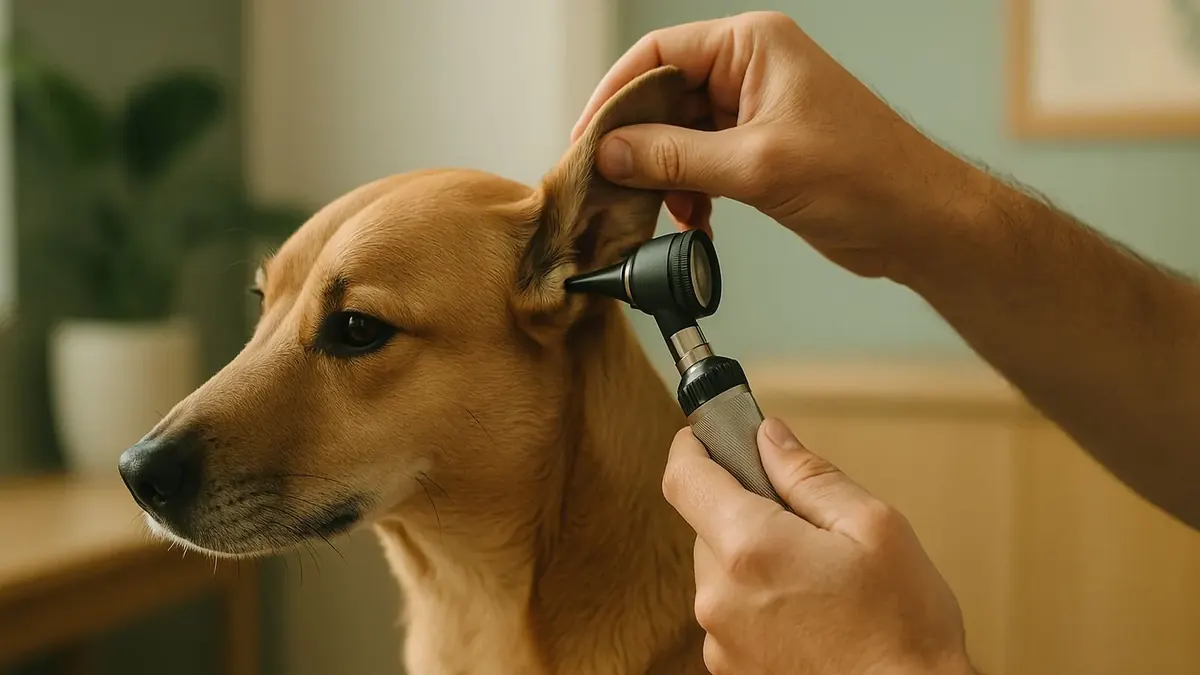
Barely visible to the naked eye but easy to see under a microscope as fast-moving white dots in dark waxy debris. A vet's otoscope can sometimes show them moving in the ear canal directly. (It's exactly as gross as it sounds. The vet finds it interesting in a way you won't.)
Symptoms of ear mites in dogs
- Frequent head shaking and floppy-ear flopping
- Scratching at the ears with hindleg or rubbing them on furniture
- Dark, dry, crumbly discharge resembling coffee grounds, classic for ear mites
- Smell, though usually less pungent than a bacterial ear infection
- Redness and irritation inside the ear flap and canal
- Hair loss around the ears from constant scratching
- Crusty patches on the ear flaps in chronic cases
Ear mites are intensely itchy. Dogs with active mites scratch hard enough to break skin or burst blood vessels in the ear flap (an aural haematoma, needs vet care, see the emergency vet guide if it happens after hours).

Ear mites vs ear infection, how to tell
Symptoms overlap. Both cause head shaking, scratching and discharge. The differences:
| Feature | Ear mites | Ear infection |
|---|---|---|
| Discharge | Dark, dry, crumbly (coffee grounds) | Yellow, brown or red, often moist |
| Smell | Mild | Strong, often yeasty or sweet |
| Common age | Puppies and young dogs | Any age, more common in floppy-eared breeds |
| Cause | Parasites, usually from cats | Bacteria, yeast, allergies, foreign bodies |
| Itch level | Intense, sudden, frantic | Variable, mild to severe |
| Other pets affected | Often yes (cats and other dogs) | Usually no |
Only way to be certain is for your vet to take a sample, look under the microscope, and identify mites or other organisms. Costs little and saves weeks of wrong treatment. For a deeper look at how infections present — smell, discharge colour, and breed risk — see the dog ear infection guide.
How dogs catch ear mites
- Direct contact with an infested cat (especially common when bringing a kitten or rescue cat home)
- Contact with another dog with mites (less common, but happens at boarding kennels and dog parks)
- Shared bedding, brushes or grooming tools, see the dog grooming guide for tool hygiene
- Wildlife, possums and stray cats are reservoirs in suburban Australia
Ear mites can survive briefly off-host but the live cycle generally requires a host animal. They can't fly or jump, transmission is contact-based.

Treatment
Ear mites in Australia are highly treatable with modern parasite products. Options:
Spot-on parasite preventives
Several monthly spot-on products approved for fleas, ticks and mites also kill ear mites. NexGard Spectra, Bravecto Plus, Revolution Plus, Advocate and similar all have evidence for ear mite treatment, with one to two doses usually clearing infestation. Talk to your vet about which suits your dog.
Topical ear drops
Veterinary ear drops containing anti-parasitic ingredients can be applied directly into the ear canal for one to two weeks. Often combined with cleaning to remove debris.
Ear cleaning
Regular cleaning of the affected ears removes the build-up that mites feed on. Don't use human ear products. Use a gentle dog-specific ear cleaner from your vet, applied with a cotton wool ball, never a cotton bud (which pushes debris deeper, which is the opposite of what we're trying to achieve).
Treat all in-contact pets
If your dog has ear mites, treat any cats and other dogs in the household at the same time, even if they show no symptoms. They're likely carriers. The cat's looking innocent. The cat is never innocent.
Don't treat blind
Over-the-counter ear mite drops at the pet shop are unreliable. They sometimes worsen ear infections by adding irritants to an already inflamed canal. The right diagnosis matters, and a 5-minute vet check before treating saves time and money.
Can ear mites spread to other pets or humans?
To other pets, yes. Cats and dogs transmit mites to each other readily. Treat all in-contact animals.
To humans, rarely. Ear mites can occasionally cause a transient skin irritation in humans, but they don't establish or live on people. Wash hands after handling an infested pet's ears and the risk is minimal. (Unlike ringworm, which absolutely does jump to humans.)
Prevention
- Year-round broad-spectrum parasite prevention covers ear mites in most cases
- Treat new pets (especially rescues) before introducing them to existing pets
- Don't share grooming tools between cats and dogs without cleaning
- Keep an eye on the ears of dogs that visit boarding kennels, daycare or dog parks
- Annual vet checks include an ear examination, see the find a vet guide if you're new to the area
When to see a vet
- Any dog with frequent head shaking or persistent ear scratching
- Dark crumbly ear discharge or strong-smelling discharge
- Sudden swelling of the ear flap (aural haematoma, needs prompt treatment)
- Pain when the ear is touched, or one ear held differently to the other
- Ear issues lasting more than a few days despite cleaning
- Other pets in the household showing similar signs
Don't tough it out. Chronic untreated ear issues lead to thickened, scarred ear canals that are harder to manage long-term. A clear diagnosis early is the cheapest path.
Ear mites are one of the few pet problems with a quick, satisfying fix. The right diagnosis, the right product, treat the whole household, done. Just don't blame the cat in front of the cat. Information here is general; ear conditions can look similar but have different causes, diagnosis should always be made by a registered veterinarian.