Kidney disease in older cats: stages and management
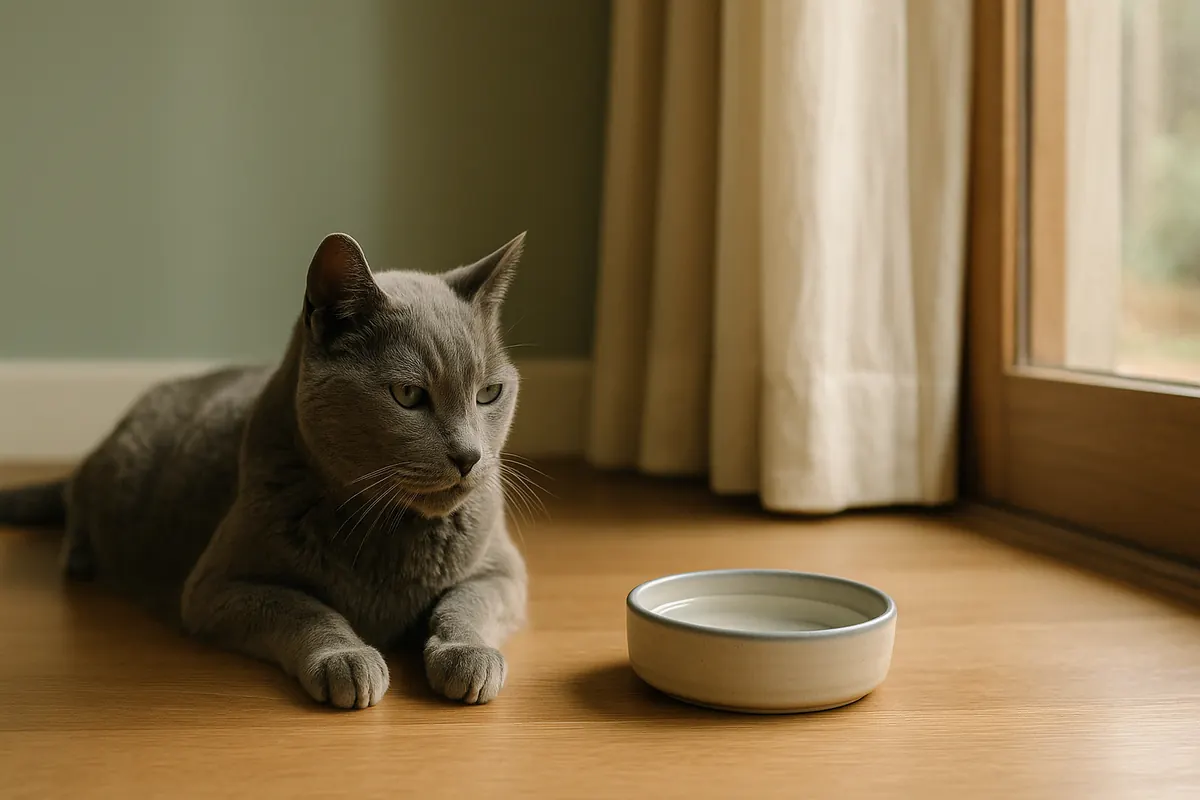
Around 30 to 50 per cent of cats over 15 years old develop chronic kidney disease. The early signs (slightly increased thirst, very mild weight loss) are easily missed for years. The cats that get caught at IRIS Stage 1 or 2 with annual senior bloodwork live 2 to 4 extra years compared to those caught at Stage 3 or 4. Below: the four IRIS stages explained, the diet question (yes), the subcutaneous fluids debate, and the realistic timeline.
Catching it early with senior bloods
The headline diagnostic markers:
- Creatinine rises late, when 75 per cent of kidney function is already lost.
- Urea (BUN) similar timing to creatinine.
- SDMA rises earlier, when 40 per cent of function is lost. The single most useful early-detection test.
- Urine specific gravity, isosthenuria (USG around 1.008 to 1.012) is a red flag.
- Urine protein-creatinine ratio measures protein loss.
- Blood pressure, hypertension is common in CKD and accelerates progression.
An annual senior wellness panel (after age 8 to 10 in cats) costs $200 to $350 and is the cheapest way to catch CKD before symptoms. The earlier the catch, the more years the cat gets.
The four IRIS stages
- Stage 1 (creatinine < 140 µmol/L). Bloods near-normal but other markers off. No symptoms. Diet and monitoring only.
- Stage 2 (140 to 250). Mild bloodwork abnormalities, often no obvious symptoms. Diet, more monitoring, sometimes phosphorus binders.
- Stage 3 (250 to 440). Moderate disease. Increased thirst and urination obvious. Weight loss, occasional vomiting. Diet, fluids, multiple medications.
- Stage 4 (> 440). Severe. Anorexia, regular vomiting, anaemia, mouth ulcers. Quality-of-life decisions become central.

The renal diet question
Renal-support prescription diets (Hill's k/d, Royal Canin Renal, Pro Plan NF) consistently extend life expectancy in cats from Stage 2 onwards by around 8 to 10 months on average. The mechanisms: reduced phosphorus, reduced (but high quality) protein, added omega-3 fatty acids, B-vitamin supplementation, antioxidants.
The hard part is getting the cat to eat it. Renal diets taste different from regular food, and CKD cats often have nausea-driven food aversion. Strategies that work:
- Transition slowly, mix renal in with current food over 2 to 3 weeks
- Try multiple brands and textures, wet, dry, pâté, chunks
- Warm wet food slightly to release aroma
- Offer renal food in a flat plate rather than a bowl (whisker fatigue)
- Treat nausea (mirtazapine appetite stimulant or maropitant anti-emetic) if the cat is just not eating
If the cat refuses renal diet entirely, regular wet food is better than a hunger-strike. The best diet is the one the cat will eat consistently.
Subcutaneous fluids at home
From Stage 3, daily or every-other-day subcutaneous fluids extend life expectancy by 1 to 3 years. After vet training (one demo at the clinic), most owners can do it at home. Cost: about $50 to $80 a month for a fluid bag, giving set, and needles.
Tell people when not to do this themselves: in some Stage 3 cats with severe heart disease, fluids worsen heart failure. Only start subcutaneous fluids on vet recommendation after a heart assessment. Cats with concurrent heart conditions sometimes need a different approach.
Medication and supplements
- Phosphorus binders (Pronefra, Renalzin) when diet alone can't keep phosphorus down. Mix into food, $30 to $60 a month.
- Anti-nausea (Cerenia / maropitant). $20 to $40 a month, transformative for cats with nausea-driven anorexia.
- Appetite stimulant (mirtazapine). Transdermal gel, applied to the ear. $30 a month.
- Blood pressure medication (amlodipine). $20 to $40 a month if hypertensive.
- ACE inhibitors (benazepril) for protein-losing nephropathy.
- B-vitamin injections as needed for poor appetite.
Realistic timeline
- Stage 1. Cats often live 3 to 5+ years if caught here. Diet alone may be enough.
- Stage 2. 2 to 4 years average with diet plus appropriate medication.
- Stage 3. 1 to 2 years average with full management (diet, fluids, multiple medications).
- Stage 4. Months to a year. Quality-of-life monitoring becomes central.
The numbers vary widely with individual cat, comorbidities, and owner ability to maintain treatment. Cats with concurrent thyroid disease often have a different progression — see the guide to feline hyperthyroidism and the cat vomiting guide for the symptom overlap.

Straight answers
How is kidney disease diagnosed?
Blood tests (urea, creatinine, SDMA) plus a urine test (USG, protein) and blood pressure. SDMA detects kidney disease earlier than older markers, before 75 per cent kidney function is lost. The full panel costs $200 to $350 at most clinics.
What are the IRIS stages?
Stage 1: bloods normal but other markers off, pre-clinical. Stage 2: mild bloodwork abnormalities, often no symptoms yet. Stage 3: moderate, increased thirst and urination obvious. Stage 4: severe, weight loss, anaemia, vomiting. The stage drives the management plan.
Is renal-support kibble worth feeding?
Yes, from Stage 2. Reduced phosphorus, reduced (but high quality) protein, added omega-3s and antioxidants. Hill's k/d, Royal Canin Renal, Pro Plan NF. Adds 8 to 10 months of life expectancy on average versus standard food at the same stage.
Can I give subcutaneous fluids at home?
Yes, after vet training. About $50 to $80 a month for fluids and a giving set, much cheaper than weekly clinic visits. Most owners learn it in one demonstration. Fluids drive Stage 3 and 4 management more than any single intervention.
How long do cats live with kidney disease?
Stage 2 cats often live 2 to 4 years. Stage 3 cats 1 to 2 years. Stage 4 cats months to a year. Catching it at Stage 1 with annual senior bloods routinely buys cats an extra 3 to 5 years.
Are kidney supplements worth it?
Phosphorus binders (Pronefra, Renalzin) help in Stage 3 and 4 if blood phosphorus is high despite the diet. Most other supplements (kidney detox blends, herbal mixes) have weak evidence. Stick with vet-recommended.
Kidney disease is the leading cause of death in older cats. The cats that do best are the ones whose owners catch it early with annual bloods, switch diet at Stage 2, and add fluids and medication as the stage progresses. Most cats with well-managed CKD live a good quality life for 2 to 5 extra years. Related: cat vomiting, vet payment plans, find a vet. Information here is general and isn't a substitute for veterinary advice.