Dog ear infection vs ear mites: how to tell
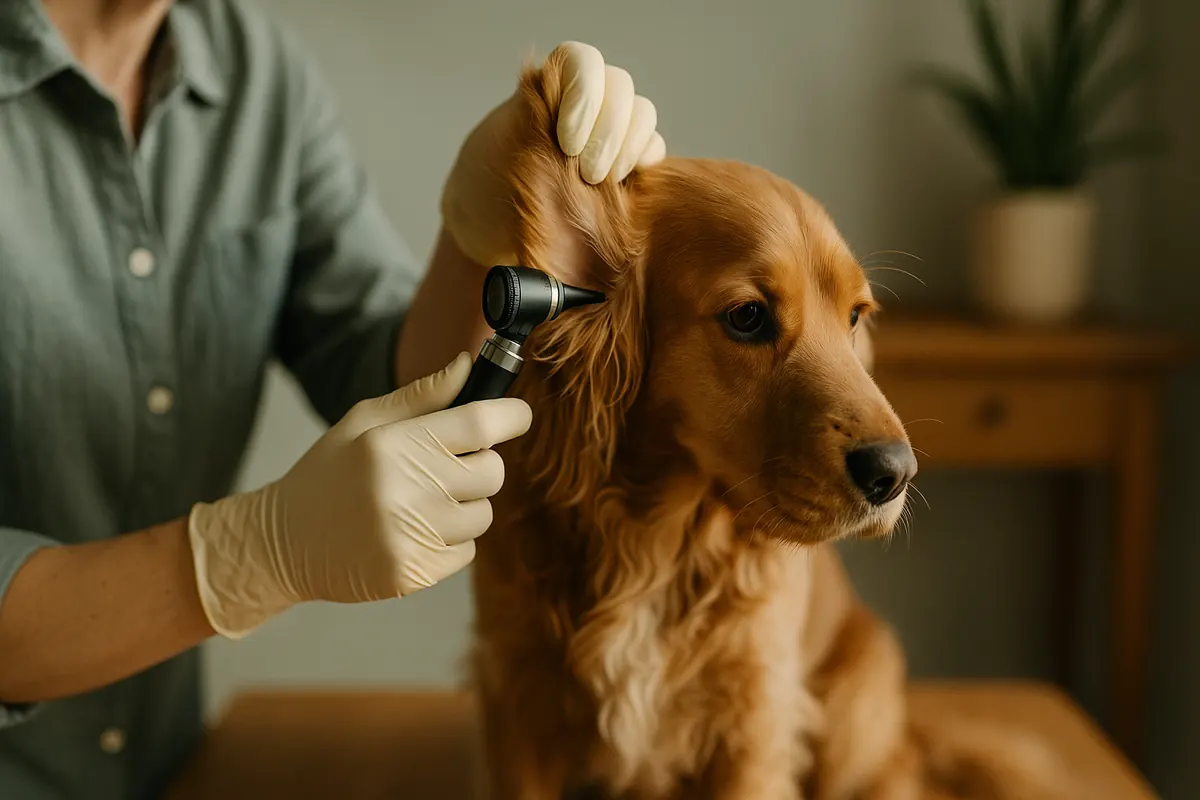
A dog with itchy, smelly ears could have a yeast or bacterial infection (most common) or ear mites (rarer in adult dogs). The two have different smells, different gunk colours, and very different treatments. Below: the home test that distinguishes them in 30 seconds, why over-the-counter ear drops can make things worse, and what an ear-flap haematoma is (when surgery becomes the answer).
Smell test, gunk colour, head-shake count
The 30-second home assessment:
- Smell. Yeasty, sour, or rancid smell = bacterial or yeast infection. No smell or only a mild earwax smell = more likely mites or no infection.
- Gunk colour. Brown waxy paste = mild yeast or wax build-up. Yellow or green discharge = active bacterial infection. Dry coffee-grounds-looking dark gunk = ear mites. Bright red or bloody = injury or severe inflammation.
- Head shaking. Constant violent shaking = active infection or pain. Occasional shake = milder issue.
- Ear flap appearance. Hot, red, swollen = active infection. Cool, normal colour = milder issue.
- Pain on touch. Yelping or pulling away = vet visit, not home treatment.
The smell test alone gives you most of the answer. If it doesn't smell, mites and wax are more likely; if it smells yeasty, infection.
Why ear infections happen
- Underlying allergy (atopic dermatitis or food allergy). The single most common reason behind recurrent ear infections. The itchy dog allergies guide covers this.
- Floppy ears trap moisture and warmth (Cocker Spaniels, Basset Hounds, Labradors).
- Water in the ears from swimming or bathing.
- Foreign bodies, grass seeds especially. The grass seeds in dogs guide covers this.
- Hair growth in the ear canal (Poodles, terriers).
- Parasites, ear mites in puppies or adopted dogs from poor environments.
Tell people when not to just keep treating the ear: if your dog has had 3+ ear infections in a year, the ear isn't the underlying problem. Allergy is the most common cause; treating that fixes the recurring infections.

Treatment that works
Standard treatment for an active infection:
- Vet ear examination (otoscope, sometimes cytology). Confirms whether the eardrum is intact, which determines safe medication choice.
- Ear cleaning with vet-grade cleaner to remove gunk so medication can reach the canal.
- Medicated ear drops (Otomax, Surolan, Posatex) for 7 to 14 days. Usually combine antibiotic, antifungal and anti-inflammatory.
- Single-dose long-acting medication (Osurnia, Neptra) for owners who can't manage daily drops. About $80 to $120 per ear, lasts a week.
- Recheck at 10 to 14 days. Confirms infection has cleared. Continuing treatment past resolution helps prevent recurrence.
For ear mites, treatment is different, ivermectin-based ear drops (Tresaderm, Ear Mite drops) for 3 to 4 weeks, plus treating any other pets in the household. Mite-only cases respond fast; mites plus secondary infection need both addressed. The ear mites in dogs guide covers this in detail.
Why OTC drops can make things worse
Several over-the-counter ear products contain antibiotics or anti-inflammatories that mask symptoms without addressing the underlying cause. Worse, some contain ingredients that can damage hearing if the eardrum is ruptured. You can't see a ruptured eardrum at home.
Tell people when not to DIY: if there's discharge, smell, pain or recurrent infection, see a vet. The $80 to $150 consult identifies the species (yeast, bacteria, mite or mixed), checks the eardrum, and prescribes the right product. OTC drops without diagnosis often delay proper treatment by weeks.
Ear-flap haematoma
An aural haematoma is a blood-filled swelling in the ear flap, almost always caused by violent head shaking from an underlying ear infection. The ear flap looks like a soft balloon.
- Surgical drainage and stitching ($700 to $1,500). The standard treatment. The ear flap is cut open, the clot evacuated, and the flap stitched flat to prevent re-accumulation.
- Needle aspiration plus steroid injection ($300 to $600). Less reliable but lower cost. Often re-fills.
- Treating the underlying ear infection at the same time, otherwise the haematoma comes back.
What it costs in Australia

Straight answers
How can I tell ear infection from ear mites?
Ear infections smell yeasty or sour and produce brown waxy or pus-like discharge. Ear mites produce dry dark discharge that looks like coffee grounds and rarely smells. Both cause head shaking and scratching, but the discharge gives it away.
Can I use over-the-counter ear drops?
Caution. Many OTC drops contain anti-inflammatories that mask the symptoms without treating the cause. If there's a ruptured eardrum (which you can't see at home), some drops cause permanent hearing damage. A vet check is $80 to $150 and rules that out.
Why does my dog keep getting ear infections?
Recurrent infections almost always have an underlying cause: allergies (most common), water in the ears, narrow ear canals, a foreign body. Treating the infection without addressing the underlying issue is why it keeps coming back.
What's an ear haematoma?
A blood-filled swelling in the ear flap, usually from a dog shaking its head violently because of an underlying ear infection. Surgery to drain and stitch costs $700 to $1,500. Treating the infection that caused it is essential, otherwise it just happens again.
Can I clean my dog's ears at home?
Yes, weekly cleaning with a vet-approved ear cleaner is fine maintenance for dogs prone to infections. Soak a cotton ball, gently wipe the outer canal, never push cotton buds in. If discharge or smell appears, see a vet rather than continuing to clean.
Are some breeds more prone?
Yes. Floppy-eared breeds (Cocker Spaniels, Basset Hounds, Labradors) and water-loving breeds (Goldens, Labs) lead the list. Narrow-canalled breeds (Shar Peis, Bulldogs) too. About 20 per cent of dogs of any breed will have at least one ear infection in their life.
Most dog ear infections are recurrent because the underlying allergy isn't being addressed. Treating the ear without treating what's causing it is the trap most owners fall into. The smell-test home check costs nothing and tells you most of what you need to know about whether to wait or drive in. Related: ear mites in dogs, itchy dog allergies, emergency vet Sydney. Information here is general and isn't a substitute for veterinary advice.