Bloat (gastric torsion) in dogs: signs and life-saving moves
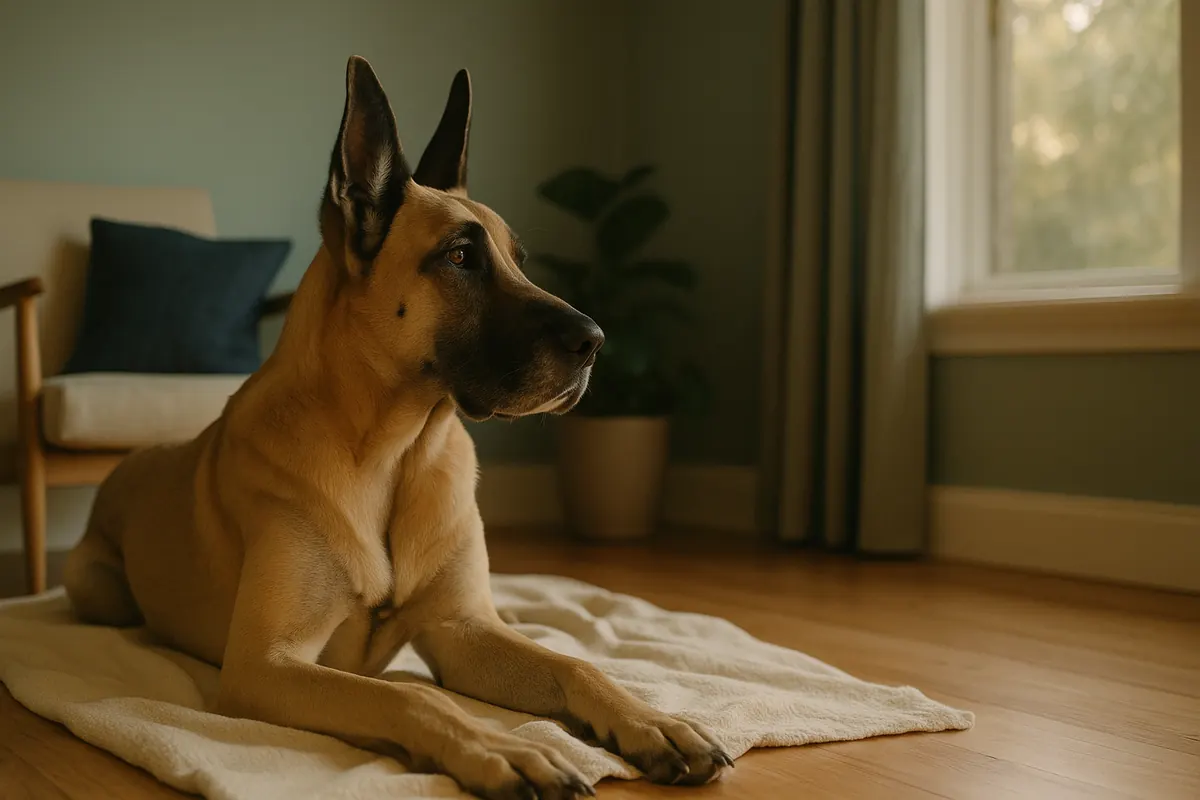
Bloat is the catch-all term for two related conditions: gastric dilatation (stomach fills with gas) and gastric dilatation-volvulus (the gas-filled stomach also rotates, twisting blood vessels). The second is the killer. Without surgery within hours, mortality is close to 100 per cent. Even with treatment, around 30 per cent of GDV cases don't survive. Below: which dogs are most at risk, the four signs every owner of a deep-chested breed must know, and stomach-tacking surgery as a preventive option.
What bloat actually is
The stomach normally sits in a fairly fixed position, held loosely by ligaments. In bloat, gas accumulates rapidly (from swallowed air and bacterial fermentation), the stomach swells, and the surrounding ligaments allow the bloated stomach to rotate. The rotation pinches off blood supply to the stomach wall and to large veins returning blood to the heart. Within hours, the stomach tissue starts to die and the dog goes into shock.
Simple bloat (no rotation) sometimes resolves with vet decompression and observation. GDV (with rotation) is always a surgical emergency.
Which breeds are at highest risk
- Great Danes (around 30% lifetime risk in some studies)
- German Shepherds
- Standard Poodles
- Weimaraners
- Boxers
- Setters (Irish, Gordon)
- Bloodhounds, Saint Bernards, mastiffs
- Other deep-chested dogs over 25 kg
Smaller dogs and round-bodied breeds get bloat occasionally but at much lower rates. The single biggest risk factor is chest depth-to-width ratio.

The four warning signs
If your big dog has any combination of these, especially within 1 to 2 hours of a meal, treat it as a bloat emergency.
- Restlessness and pacing. Won't settle. Looking at the belly. Acting like they're trying to vomit but can't sit still.
- Unproductive retching. The classic sign. The dog is trying to vomit but produces nothing or just a tiny amount of foam. The stomach is twisted, food can't come up.
- Distended abdomen. The belly looks swollen, especially behind the ribs. Press gently, it feels tight like a drum.
- Drooling, rapid shallow breathing, weakness. The dog progresses to shock within 1 to 2 hours.
From normal to in-trouble can be under 30 minutes. Don't wait to see how things develop.
What to do if you suspect bloat
- Don't try home remedies. No water, no antacids, no walking it off. None of these help; some make it worse.
- Drive to the nearest emergency vet. Ring ahead. They need to know you're coming with a suspected GDV so they can prepare X-rays, IV access, and surgical staff.
- Keep the dog as still as possible during transport. Carry into the clinic if you can.
The diagnostic process is fast, X-rays show whether the stomach is just dilated or also twisted. If twisted, surgery happens immediately. The total cost of GDV surgery in Australia is $5,000 to $10,000 including post-op intensive care. Pet insurance taken before symptoms typically covers most. The vet payment plans guide covers other options.
Stomach-tacking surgery (gastropexy)
Gastropexy is a preventive surgery that sutures the stomach wall to the abdominal wall. The stomach can still bloat (fill with gas) but it can't rotate, which removes the killer half of the equation. Gas-only bloat is much more survivable.
Performed:
- Prophylactically at desexing in young high-risk dogs (Great Danes, German Shepherds). Adds 30 to 45 minutes to the desexing surgery, $400 to $800 extra.
- As a separate procedure in adult high-risk dogs. $1,200 to $2,500 standalone.
- At the time of GDV surgery (always done if surgery is needed for an actual bloat episode).
Reduces lifetime bloat-with-rotation risk by around 90 per cent. For a Great Dane puppy, gastropexy at desexing is one of the highest-value preventive procedures available. Many breeders now require it as a condition of sale. Worth discussing with the breeder and the vet before desexing date is set. The TPLO surgery guide covers another preventive procedure to ask about. The emergency vet Sydney guide has the closest 24-hour clinics.
Daily prevention
- Feed 2 to 3 small meals daily, not one big one
- Avoid exercise for 1 hour before and 2 hours after meals
- Use a slow-feeder bowl for fast eaters (the maze-style bowls reduce gulping)
- Use floor-level bowls, not raised feeders (research has flipped on this in the past decade)
- Reduce stress at meal time in multi-dog households (eat separately if there's competition)
- Keep weight lean, obese dogs are at higher risk

Straight answers
Which breeds are most at risk?
Deep-chested dogs over 25 kg, Great Danes, German Shepherds, Standard Poodles, Weimaraners, Boxers, Setters, Bloodhounds. Around 30 per cent of Great Danes get bloat in their lifetime. Smaller dogs occasionally get it but the rate is much lower.
What are the warning signs?
Restlessness, pacing, looking at the belly, drooling thick ropy saliva, attempting to vomit but producing nothing (the giveaway), distended belly, rapid shallow breathing. From normal to in-trouble can be under 30 minutes.
Can bloat be treated without surgery?
Sometimes a vet can pass a stomach tube to relieve gas (simple bloat) without surgery. Once the stomach has rotated (volvulus), surgery is the only option. Most cases that come into emergency are already volvulus.
What is gastropexy and is it worth it?
Stomach-tacking, a surgical procedure that fixes the stomach to the abdominal wall so it can't twist. About $400 to $800 added to a desexing surgery in young dogs of high-risk breeds. Reduces lifetime bloat risk by around 90 per cent.
Does feeding height matter?
Yes, but not the way pet shops sell it. Elevated feeders were once recommended but research now suggests they may slightly increase bloat risk in giant breeds. Floor-level bowls and slow-feeder designs are safer.
Can I prevent bloat without surgery?
Reduce risk: feed 2 to 3 small meals daily not one big one, slow down fast eaters with a slow-feeder bowl, no exercise for an hour after meals, keep weight lean. None of this eliminates risk in high-risk breeds, gastropexy does.
Bloat is one of the few veterinary emergencies where preventive surgery is genuinely worth it for high-risk breeds. The four warning signs (restlessness, unproductive retching, distended belly, weakness) are the four every Great Dane owner should be able to recite. Related: emergency vet Sydney, TPLO surgery, vet payment plans. Information here is general and isn't a substitute for veterinary advice.