Why your dog's breath stinks (and what to do)
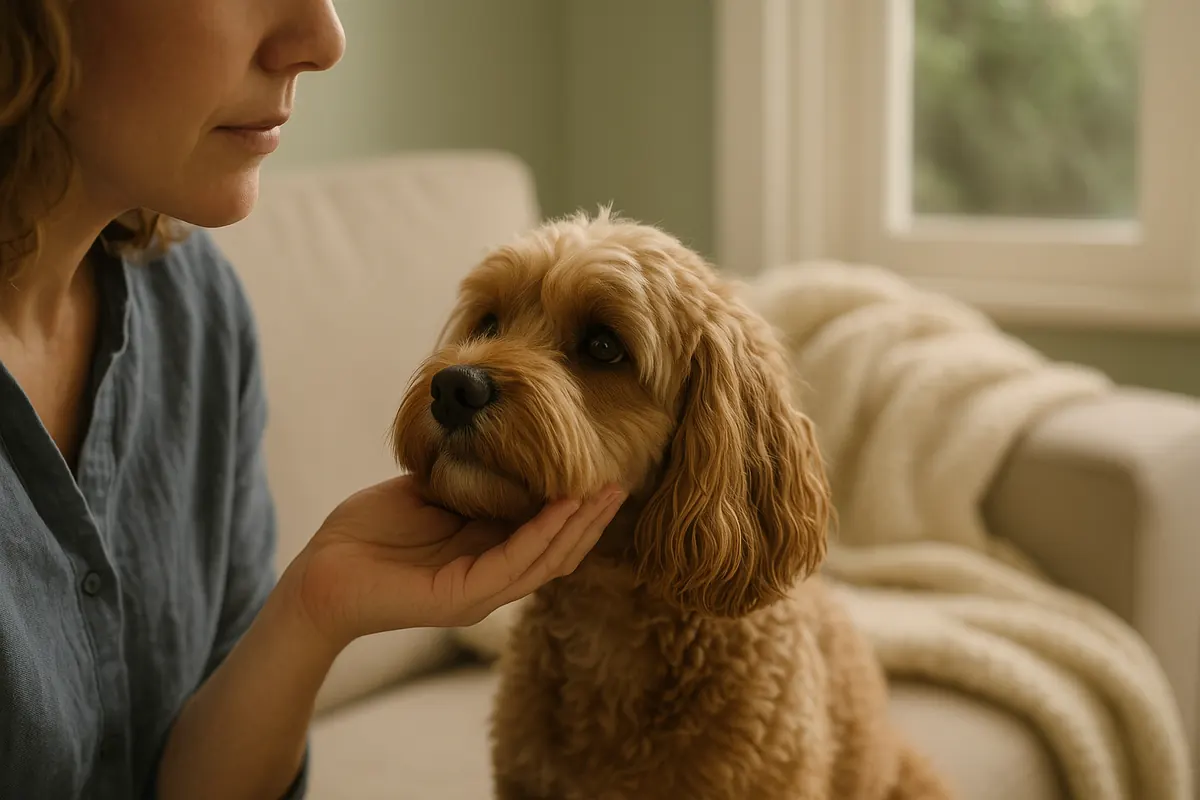
Nine times out of ten, bad breath in dogs is the first sign of dental disease. Not the food, not the toy, not "just dog breath", actual plaque-and-bacteria dental disease. Below: the 30-second home check to do tonight, the four other causes worth ruling out, and what professional dental cleaning costs in Australia (the answer is rarely "as bad as you fear").
The 30-second home check
Before booking anything, run this check at home. You only need a torch and a calm dog.
- Lift the lip on each side. Look at the canine teeth (the long ones) and the back molars. Healthy teeth are mostly white with pink gums.
- Look for tartar. The hard yellow-brown deposit at the gum line is calcified plaque. A small amount on the back molars is normal in adult dogs. Heavy build-up across most teeth means professional cleaning is overdue.
- Press gently on the gum. Healthy gum blanches and pinks back in 1 to 2 seconds. Red, swollen, or bleeding gums are gingivitis.
- Smell the breath at the gum line. Sour or sweet "doggy" smell is normal in young dogs after eating. Genuinely foul, fish-or-rotten-meat breath is bacterial overgrowth, almost always dental.
- Check for missing or wobbly teeth. A gap or a movable tooth is end-stage dental disease. Vet appointment, this week.
If three or more of those flags come up, the cause is dental in 9 of 10 cases. Skip the breath spray and book a dental check. The dental cleaning for dogs guide covers what the appointment looks like.

The dental cause (the most common one)
Plaque starts forming within hours of eating. Within 48 hours, plaque mineralises into tartar. Tartar can't be brushed off and is the home for bacteria that cause gingivitis (inflamed gums) and eventually periodontitis (the bone around the tooth root erodes).
By age three, around 80% of dogs have some form of periodontal disease. Small breeds are worse: Cavalier King Charles Spaniels, Yorkshire Terriers and Greyhounds tend to need more frequent professional cleaning than Labradors or Golden Retrievers, partly genetics and partly tooth crowding in small jaws.
The dog whose breath suddenly went from "fine" to "rancid" usually has a tooth root abscess or a fractured tooth. Both are painful (dogs hide pain well, particularly chronic dental pain), and both need a vet, not a dental chew.
Four other causes worth ruling out
Once dental is ruled out (or treated), there are four medical causes of persistent bad breath worth a vet check.
- Kidney disease. Ammonia or "urine" smell on the breath, particularly in older dogs. Caused by uraemia, a build-up of waste products the kidneys can't clear. Needs blood and urine tests.
- Diabetes. Sweet or fruity smell, sometimes described as "nail polish remover". Indicates ketoacidosis, a serious complication of uncontrolled diabetes.
- Liver disease. Musty or sulphur smell. Often accompanied by jaundice, vomiting, or lethargy.
- Gastrointestinal issues. Foul breath plus vomiting, diarrhoea or weight loss can indicate inflammatory bowel disease, foreign body, or parasites. The cat vomiting guide covers feline equivalents.
Tell people when not to panic: if your dog's breath smells like the inside of their mouth (faintly funky, kind of meaty) and the gums look healthy, that's normal. Most "my dog's breath smells" calls turn out to be either food residue from the most recent meal or coprophagia (eating poo, sorry). Neither is a medical emergency.
What professional dental cleaning costs in Australia
The big variable is extractions. A six-year-old Cavalier coming in for a "first clean" often turns into 3 to 5 extractions and a $1,000+ bill. The same dog cleaned annually from age 3 might never need extractions. The maths favours regular maintenance, particularly for small breeds. The vet payment plans guide covers options if it's a stretch.
One opinion worth flagging: anaesthesia-free dental cleaning (sometimes offered at groomers or pet shops) doesn't work and can hide problems. The reason vets use anaesthesia is to clean below the gum line, where the disease actually is. Anything done to the visible part of the tooth is cosmetic. Tell people when not to do it: skip anaesthesia-free cleaning, even if it's cheaper, even if your dog is small. It's not the same procedure.

Daily prevention that actually works
The order of effectiveness, vet-approved, is unromantic.
- Daily tooth brushing with enzymatic dog toothpaste. The single most effective home intervention. Takes 30 seconds, costs about $15 a month.
- Vet-recommended dental diets (Hills T/D, Royal Canin Dental). Texture and shape designed to scrape teeth. About $30 to $50 a month more than standard food.
- VOHC-accepted dental chews (Greenies, Whimzees, OraVet). The dental chews guide goes deeper. About $1 to $2 per chew, daily.
- Water additives (Aquadent, Healthy Mouth). Mild effect, very low effort. Reasonable add-on but not a substitute.
- Annual professional cleaning from age 5 (smaller breeds) or age 7 (larger breeds). Not optional in dogs predisposed to dental disease.
The tooth brushing thing is the one most owners skip and the one with the strongest evidence. Five minutes of training to get the dog used to the brush, then 30 seconds a day. Most dogs accept it within a fortnight if introduced gradually with peanut butter or chicken-broth-flavoured paste.
Straight answers
How often should I brush my dog's teeth?
Daily is the gold standard. Three times a week is meaningfully effective. Once a week is better than nothing. Less than that, and you're relying on dental chews and professional cleaning.
Are dental chews enough on their own?
For low-risk breeds and clean-mouthed adults, sometimes yes. For small breeds, brachycephalics and senior dogs, no. Chews supplement brushing, they don't replace it.
Why does my puppy have bad breath?
Puppies losing milk teeth (between 4 and 6 months) often have temporary bad breath from the eruption process. It resolves within weeks of the adult teeth coming through. If breath is foul or there's bleeding, see a vet.
Can I use human toothpaste on my dog?
No. Most human toothpastes contain fluoride or xylitol, both toxic to dogs in the quantities they swallow. Use enzymatic dog toothpaste, which is designed to be swallowed.
Is anaesthesia for dental cleaning safe?
Yes, in healthy dogs with pre-anaesthetic blood tests. The anaesthetic risk in healthy adults is around 1 in 1,000. The risk of untreated dental disease (heart and kidney damage, chronic pain) is dramatically higher.
How fast does plaque turn into tartar?
About 48 hours from soft plaque to mineralised tartar. Once tartar forms, brushing won't remove it. That's why daily brushing matters: it stops the conversion.
Bad breath isn't a vanity issue. It's the most reliable home signal of developing dental disease, and dental disease in dogs is associated with measurable systemic effects on the heart and kidneys. Fixing it is one of the highest-impact things you can do for a senior dog. Related: dental cleaning for dogs, dog dental chews, dog dental chart. Information here is general and isn't a substitute for veterinary advice.