When are cat hairballs normal vs a vet visit?
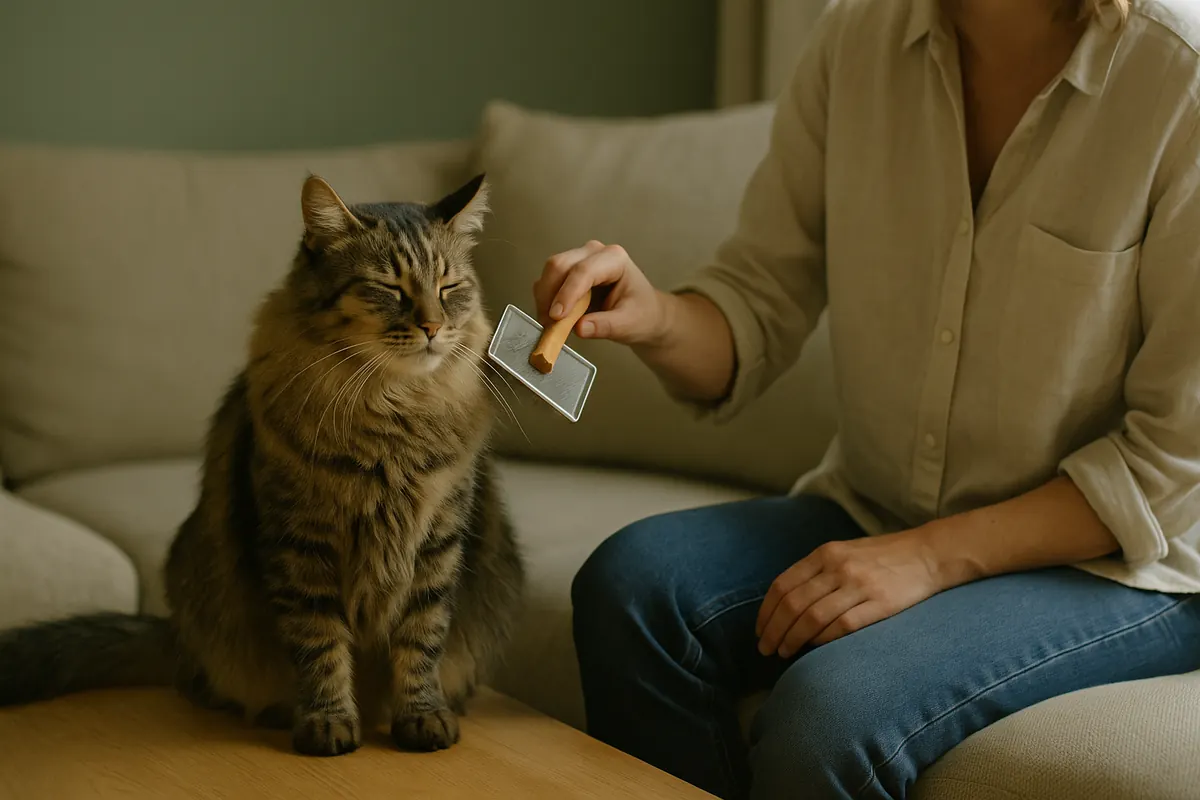
Hairballs (technically trichobezoars) are normal in cats; the question is how often. Once a fortnight is normal. Once a week is borderline. More than that, or retching that produces nothing, can mean inflammatory bowel disease, food allergy, or a foreign body. Below: how grooming frequency, diet, and underlying health combine, and the daily 5-minute brushing routine that prevents about 70 per cent of hairballs.
How often is normal
- Short-haired adults: once every 1 to 2 weeks is typical, especially during shedding seasons.
- Long-haired cats (Persian, Maine Coon, Ragdoll): up to once a week is within normal range.
- Senior cats (over 12): trend higher, often weekly. Older cats groom more (anxiety, less able to digest fibre).
- Indoor cats with constant air-con shed year-round, more hairballs than outdoor cats with seasonal shedding.
Anything more frequent than weekly, or a cat retching unproductively without producing a hairball, is worth investigating.
Why some cats get more than others
- Coat length and density. Long-hairs ingest more fur per grooming session.
- Over-grooming due to stress or skin condition. An anxious or itchy cat grooms 2x normal, doubling hair intake. The pet anxiety guide covers the behavioural side; ringworm in cats the dermatological.
- Slow gut transit. Some cats just digest fibre slowly, more hair stays in the stomach long enough to form a ball.
- Inflammatory bowel disease. A common diagnosis behind “chronic hairballs” in cats over 8.
- Diet low in fibre. All-meat diets or low-quality kibble move slower through the gut.

Daily prevention that works
- Daily 5-minute brushing with a slicker brush or fine-toothed flea comb. Removes about 70 per cent of loose fur. Single highest-impact intervention.
- Hairball-control diet (Hill's Science Diet Hairball, Royal Canin Hairball Care) adds fibre to push fur through the gut. Useful for repeat cases. $50 to $80 a month.
- Hairball remedy paste (Laxapet, Petromalt). Mineral-oil-based lubricant, given once or twice weekly during heavy shedding. About $15 a tube, lasts 2 to 3 months.
- Adequate hydration. Wet food, fresh water, water fountains. Hydrated cats pass fur more easily.
- Lion-cut shaving for severely matting Persians and Maine Coons. $80 to $150 every 3 to 4 months.
- Address grooming stress. If a cat is over-grooming due to anxiety, fixing that fixes the hairball rate too.
When to see a vet
Tell people when not to wait this out:
- Retching that produces nothing repeatedly, hairball is stuck or a different problem entirely
- More than once a week, consistently, especially if the cat is over 8
- Vomiting other food too, not just hairballs (see the cat vomiting guide)
- Weight loss over weeks, possible IBD or other GI condition
- Loss of appetite, lethargy, possible obstruction
- Hard or distended abdomen, surgical emergency
What investigation costs
Most chronic-hairball investigations stop at bloods plus an abdominal ultrasound. Endoscopy with biopsies is reserved for cases strongly suggesting IBD where the treatment plan depends on biopsy results.

Straight answers
How often is normal?
Once every 1 to 2 weeks for short-haired adults; long-hairs and Persians up to once a week. More frequent than that, or retching without producing anything, deserves a vet check, hairballs aren't the only thing that looks like hairballs.
Why are hairballs more common in summer?
Cats shed more in warmer months, more fur swallowed during grooming, more hairballs. Indoor cats with air-con may shed year-round and bring it forward.
Do hairball treats actually work?
Mildly. The fibre and lubricants (mineral oil, malt) help fur pass through the gut rather than cough back up. Useful for cats prone to hairballs, not transformative. Brushing daily is more effective.
Can hairballs cause an obstruction?
Rarely, but yes. A large hairball can lodge in the small intestine and cause a blockage, surgery to remove. Signs: vomiting that won't stop, refusing food, lethargy, hard distended abdomen. Same-day vet.
Should long-haired cats be shaved?
Lion-cut shaving (body shaved, head and tail left) helps Persians and Maine Coons that mat or struggle to groom themselves. Cost is $80 to $150 every 3 to 4 months. Short-haired cats don't need it.
Could it be inflammatory bowel disease?
Yes, particularly in cats over 8 with frequent hairballs plus weight loss or chronic loose stool. IBD is treatable but needs a vet diagnosis (often via biopsies). Many 'hairball cats' turn out to have IBD when properly worked up.
Hairballs are normal up to a point. The cats that get more than that often have a fixable underlying cause, dietary, behavioural, or medical. Daily brushing handles the bulk. The vet visit handles the rest. Related: cat vomiting, dog grooming, find a vet. Information here is general and isn't a substitute for veterinary advice.